Every hive has its own law

W170226-marsell, it’s official, or at least I am official. After an inspection this past week, I am legally permitted to sell bees in the state of Virginia. I have the stickers to prove it.

In our weather, we had three days over 70 F (21 C) this past week, and the hives are starting to raise brood in earnest to prepare for springtime.

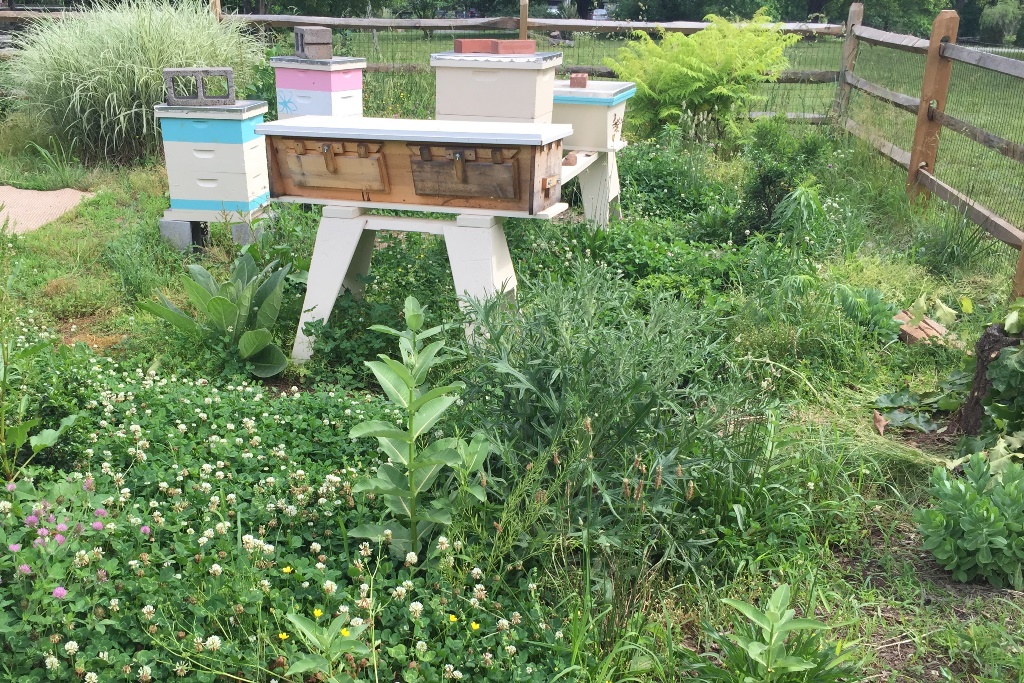
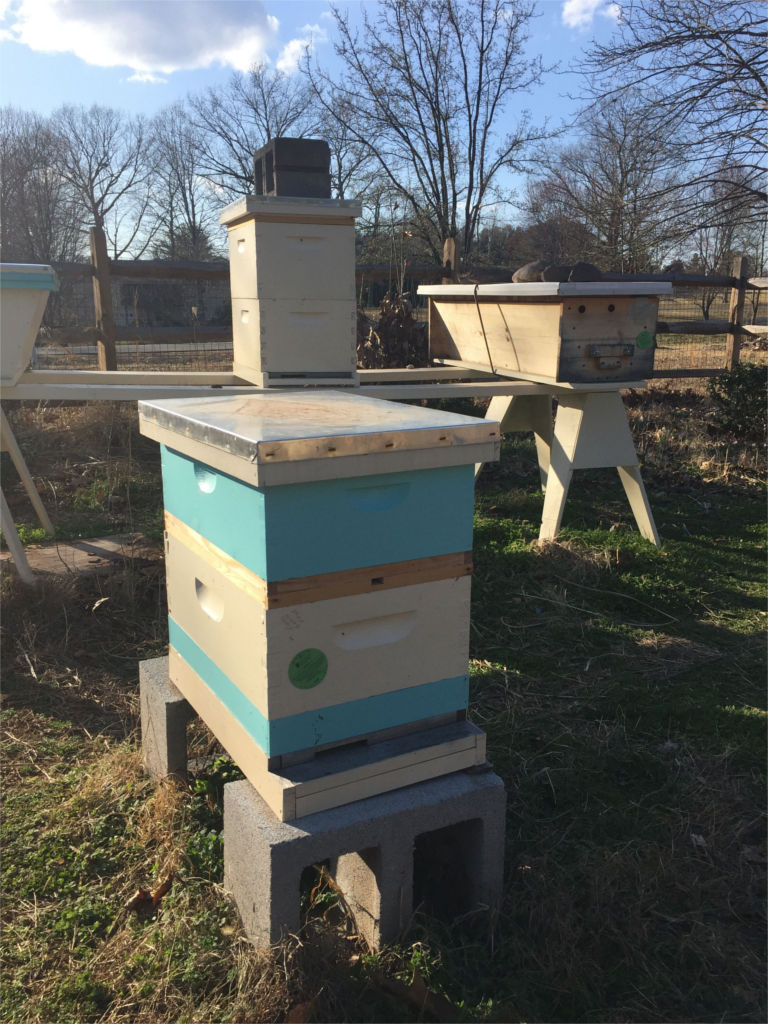
The photo here shows Mars reduced to one medium with some extra stores on top, with Ganymede (the Lang) and Venus (the top bar) in the back. Continue reading
Our Hives They Are a-Changin’

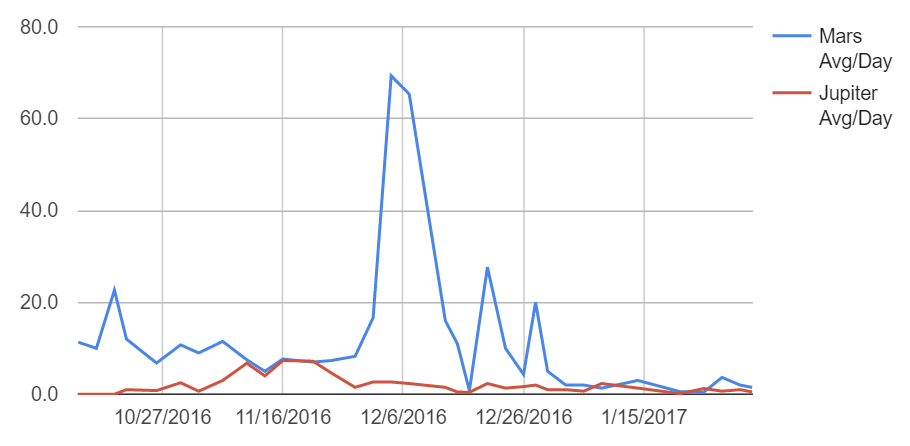
Aside from a single white morning this winter, we have had very little snow in Virginia. The weather is unusually warm and the bees seem to get a flying day once a week or so. I suspect the insect population will be robust this year, from small hive beetles to other assorted insects, due to our lack of cold weather. Soon the bees will start ramping up for spring, and I have been keeping an eye on the mite populations in Mars and Jupiter.

170202-graph

Average mite drop per day in Mars and Jupiter. The count spiked in early December after I applied an oxalic acid dribble.

Continue reading

Winter weather and beekeeper’s thoughts change often

161203a-sugar-cake

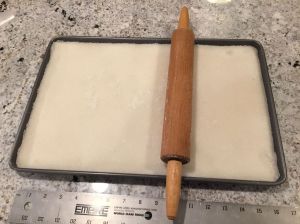
Making sugar cakes on December 3. © Erik Brown

My friend Gordon used to say that it takes three years to become a good teacher. We were teaching secondary school in Botswana, Africa at the time, preparing students for their O-level and A-level exams. Gordon said that you spend the first year figuring out the material, the second year figuring out how to teach, and the third year really teaching. Of course, I only taught for two years, so it never quite happened for me.

This may apply to how beekeepers overwinter bees as well. I read and learned much and stumbled through my first winter. As we enter my second winter I have stronger opinions about what I should have or could have done better. Next year I will be perfect. Continue reading

The chem is mitier than the swarm

Bee Plate

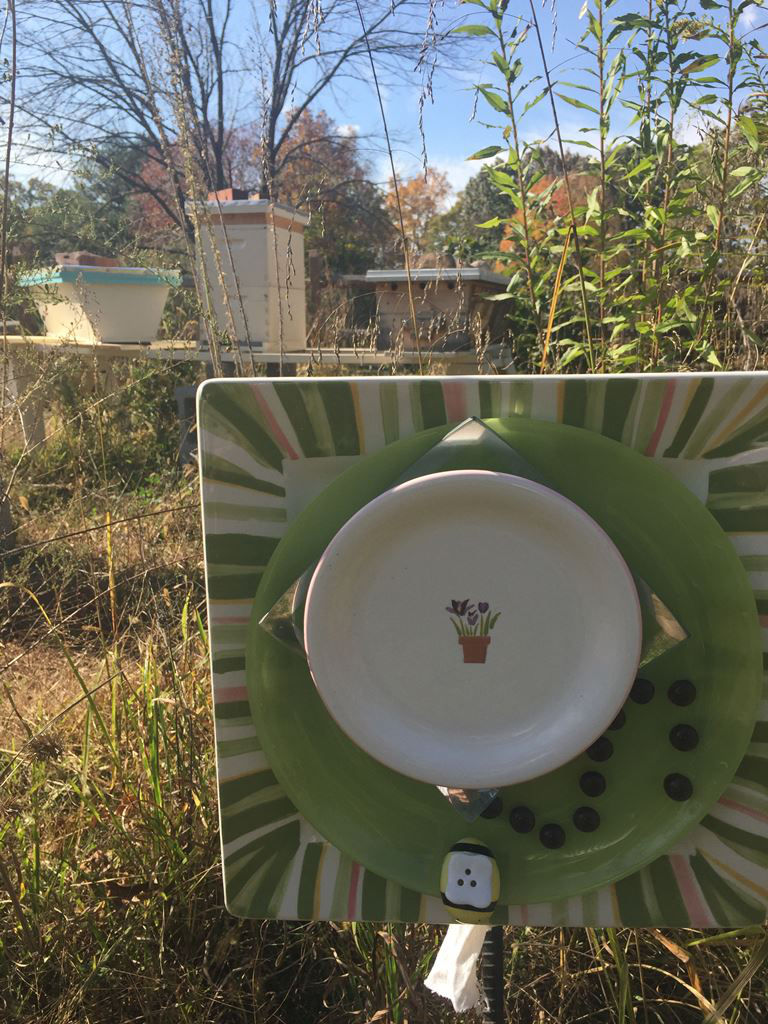
A recent gift from my crafty neighbor in the bee yard. It shows a bee flying in front of a flower. Too cute! ©Erik Brown

My two original Langstroth hives, Mars and Jupiter, have had their ups and downs this year. Mars did well, but then had queen issues. Jupiter survived a split, a swarm that I caught, and likely another swarm that I missed. Both hives are going into winter and I have been checking mite drops on the bottom board of both hives lately.

This is their story.

Continue reading

Bee right as rain

161001c-mars-feederI am in the sky at 34,002 feet as I write this, on my way to California and thinking about my rain-sodden bees in Virginia. Northern Virginia had five days of solid rain, well over 5 inches (12 cm) of water at our house. The bees (and the people) have been huddled away waiting for it to end. As I left the house the sun peered out to see what was left of the land.

With fall firmly in place, I naturally wonder whether the bees have enough food for the winter. Last year I was able to bring my three hives through to the spring. I hope my five hives will do the same for my second winter with bees. Yesterday I provided some additional food for some of the hives to help pull them through. Continue reading

It bee better to give than to receive

160821a Apiary

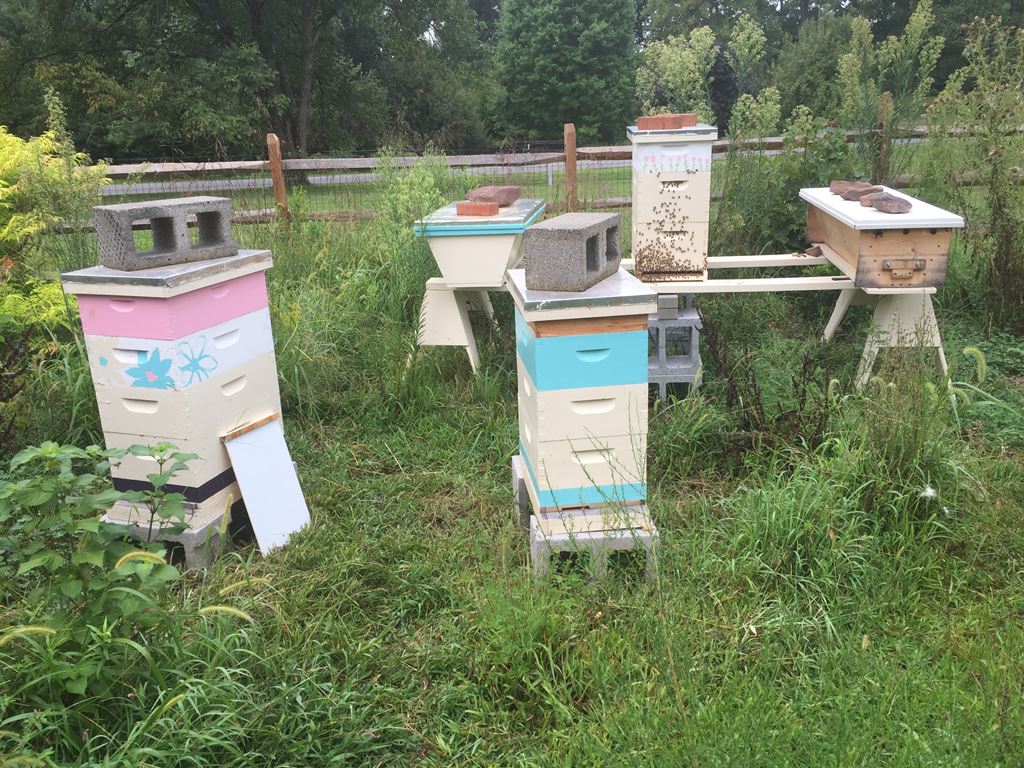
The yard on August 21, 2016. (c) Erik Brown

As my second beekeeping summer comes to a close, it is the time of year when beekeepers count the many pounds of honey collected from their hives, and answer the age-old question of how to handle the dreaded varroa mite.

This year I gathered my first honey, a grand total of nearly 6 cups worth. As another local beekeeper put it, the price per pound of that honey is pretty steep. Beekeeping equipment is not cheap, bees are not cheap, and our time is somewhat precious. All for a few jars of honey. Perhaps it is more about the love of bees and the joy of a hobby, at least for me. Continue reading

I’ve got my mind on my honey


160806a Strainer

My two bucking crush & strain system

I stole a frame from our hive Mars recently. While I wasn’t exactly sure how much honey one medium Lang frame would produce, I was ready to find out. Also, I really wanted to try the two-bucket straining system I bought from Brushy Mountain earlier this year.

You may recall that I bottled a single jar of honey in the spring. That was a very clear spring honey, tasty and not too sweet. It was good, though I was hoping the summer honey would be a little sweeter. I’d read that honey tends to get darker as the season goes on. Continue reading

To every hive there is a season

160730 Butterfly

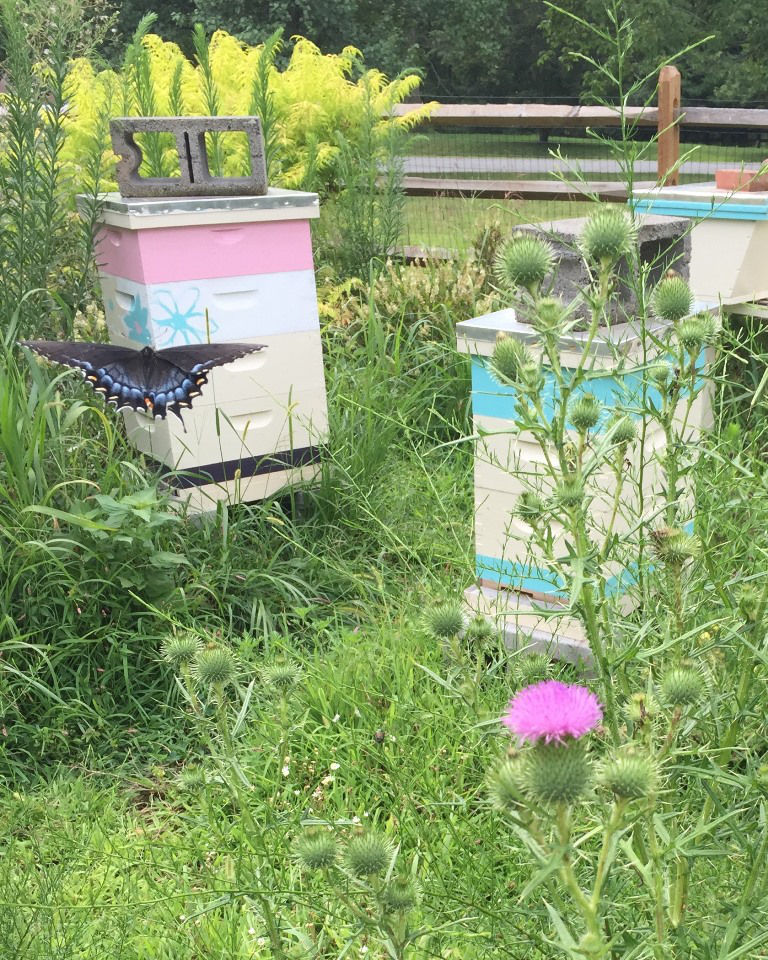
A butterfly in the bee yard, with Mars and Jupiter in the background. © Erik Brown

In my second year, I have become a lazy beekeeper. Last year, oh so long ago, I inspected each hive every week or two. I visited the apiary nearly every day to visually check the hives. I kept close tabs on their progress, and worried about the many things that could go wrong.

This year the bees have been fine, doing their bee stuff, and I’ve been working, travelling, and otherwise not looking in on them.

For much of July this bothered me, and I felt guilty that I left the bees to their own designs. It was hot, many days over 100 F (38 C), and I was on the road one way or another for three out of the last four weeks. I just didn’t feel up to checking the hives, so I didn’t. I finally got into my five hives this weekend, and for the most part the bees are fine. Given my lack of blogging lately as well, I figured it was time for an update. Continue reading

Drones are from Mars, Queen is for Venus

Venus and and the other hives on June 5 amongst the weeds in the bee yard.

Venus and and the other hives on June 5 amongst the bee-friendly weeds in the bee yard.

I have been away from this blog and out of the hives for a couple weeks. A little too much travel and jet lag and other distractions. Trying to catch up this weekend, starting with the status of the new queen for Venus. My prior post on Venus described how Venus appeared to be without a queen, and how a new Russian queen from nearby breeder Chris Hewitt was caged and ready to be released in the hive. Continue reading