Drops of Jupiter in her hive

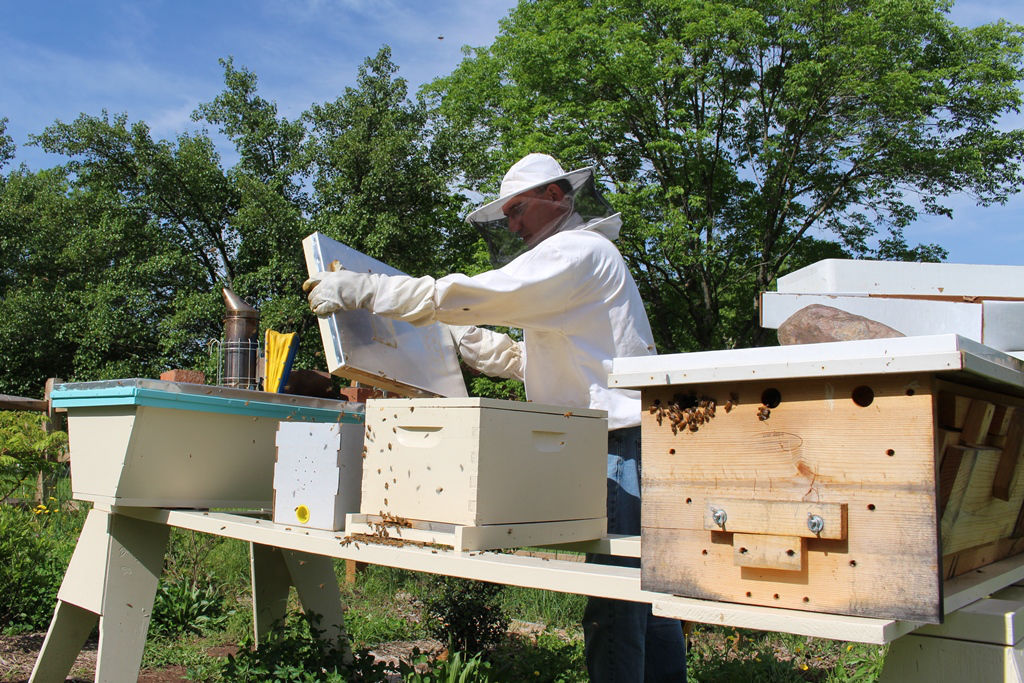
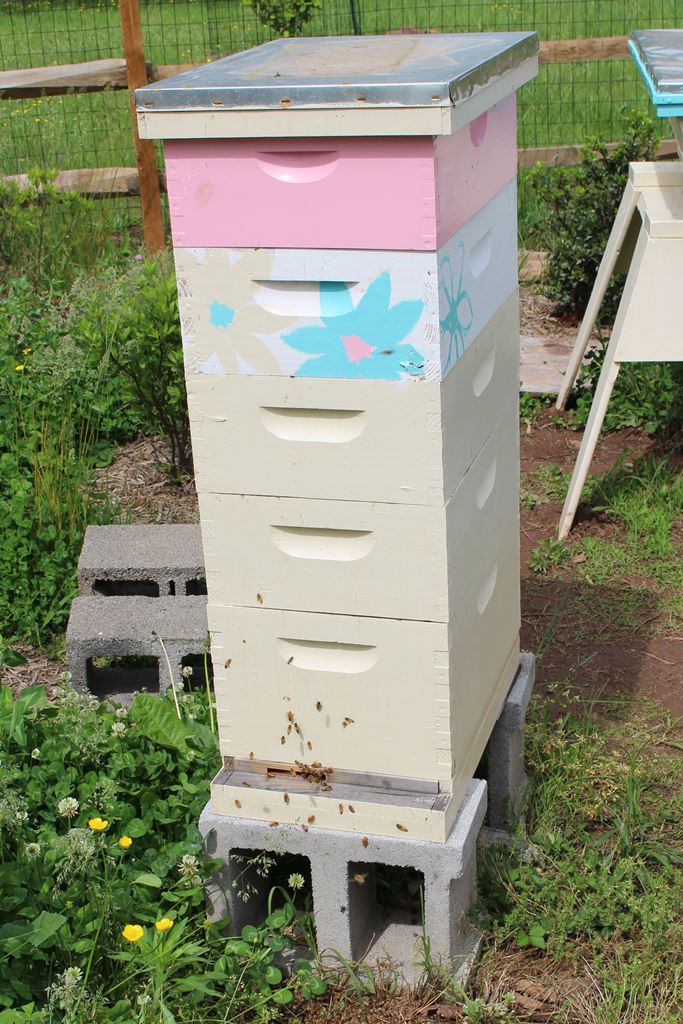
Jupiter has had an eventful season; our hive, not the planet. I did a rushed split on April 11 to create the hive now called Ganymede. When Jupiter swarmed anyways on April 25, I caught the swarm to create what has become our new top bar hive Saturn. Ganymede did so well I split her again to share a nuc with a friend. After all this, I was worried that Jupiter might not have a queen, only to find larva and brood about four weeks later (meaning a queen was present).

So it seems a report on the progress of Jupiter and her satellites, so to speak, is in order.
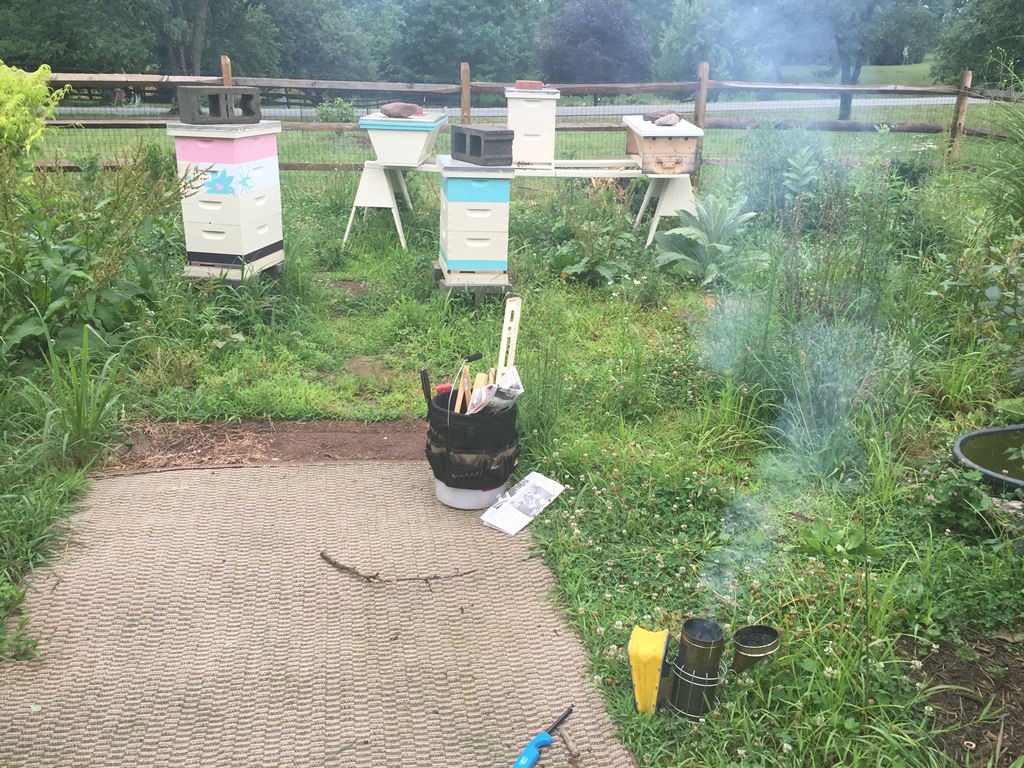
160617 Apiary

The hives before inspection on June 17. The smoker is lit and ready to go.
Continue reading

Drones are from Mars, Queen is for Venus

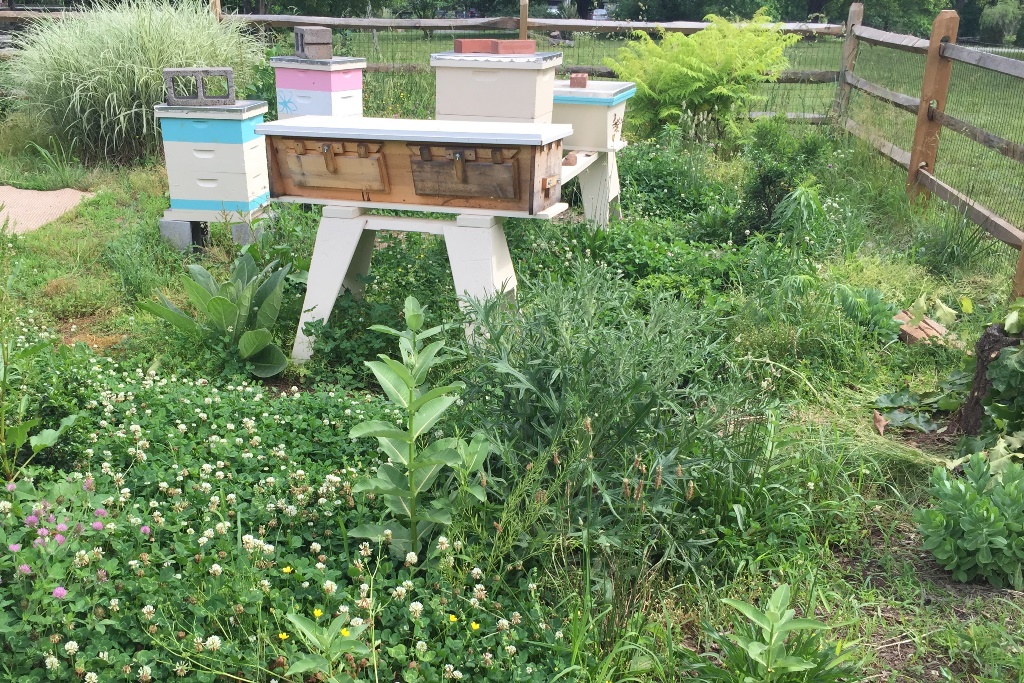
Venus and and the other hives on June 5 amongst the weeds in the bee yard.

Venus and and the other hives on June 5 amongst the bee-friendly weeds in the bee yard.

I have been away from this blog and out of the hives for a couple weeks. A little too much travel and jet lag and other distractions. Trying to catch up this weekend, starting with the status of the new queen for Venus. My prior post on Venus described how Venus appeared to be without a queen, and how a new Russian queen from nearby breeder Chris Hewitt was caged and ready to be released in the hive. Continue reading

Everybody wants to rule the hive

160528i ApiaryMost parents worry about their kids. When my oldest daughter was four I asked my father when you stop worrying about your children. He replied that you never do. It made me pause.

As well, apparently, with a small bee yard. Although perhaps the possibilities are not quite so dire, you still worry. Is the queen well? Will the hive swarm? Do they have enough food? In recent weeks I have worried that four of my now five hives might not have a viable queen. The bees, to their credit, are teaching me patience. Continue reading

A New York Frame of Mind

160520 Brushy FrontI was in Ithaca, New York last weekend for my father’s birthday. He’s a rather active 80-year-old as of the weekend, and you may recall his help in building a new top bar hive this past winter. My siblings and I were there for a couple days to celebrate the milestone and enjoy each other’s company. Of course, a couple beekeeping activities found their way into my travels as well. Continue reading

Mars, the Bringer of Stings

160514 22 Mars Pre

Mars, before my inspection.

There was a post on BeeSource.com last year that asked experienced beekeepers what advice the would offer that perhaps wasn’t typically taught in books. There were a couple suggestions I started using, and today I may have learned that one of them can present some problems.

One idea was about how to place frames back in the hive. Rather than setting them in the box and pushing the frames together, I slide frames into the box along an existing frame. Pushing two frames together risks squishing bees, whereas the bees tend to get out of the way as you slide the frame in. This has worked well for me.

Another idea was to inspect the boxes from the bottom to the top. Continue reading

Red skies are night, to a bee’s sight

Rose Campion

Rose campion from the site Cherry Gal

On a recent visit to George Washington’s house, we happened upon their annual plant sale. Not being one to pass up a pretty plant, especially one from President Washington’s very own garden, I picked up a couple Lychnis coronaria, commonly known as rose campion.

The plant intrigued me because the fuzzy leaves reminded me of the woolly leaves of lamb’s ear, a perennial we have around the yard. In early summer, the bumble bees are all over the lamb’s ear flowers, so I thought I would add the new plant to our little bee yard. Continue reading

Bees of a feather swarm together

160425 Swarm 1

First swarm of the year. Really, first swarm of my life. To think I started this endeavor just over a year ago, hiving my three hives on April 19, 2015. Now the little buggers (literally!) are going off on their own. I remember when they were just a little nuc box, eager to grow into a full-sized hive. Continue reading