Today’s letter H is for Heart. Do bees even have a heart? You may be surprised to learn that they sorta do, and sorta don’t. Like all insects, bees do not have a central circulatory system with a single heart pumping blood throughout the body. Instead, like most insects (really, most anthropods), bees have an open circulatory system that moves hemolymph throughout the body.
Continue readingG is for Glossa
Today’s letter G is for Glossa. The glossa is the tongue of an insect, especially the tube-like structure used by bees to ingest nectar and other liquids. While the word proboscis is often used for a bee’s tongue, the tongue is in fact made up of many different parts, as we saw in a post on Mouth parts earlier this year (as part of The 12 Days of Honey Bees series).
Continue readingF is for floral fidelity
Today’s letter F is for floral fidelity (see that alliteration there!). While honey bees are generalists and will gather nectar from pretty much any available flower, they prefer to forage from one plant at a time. This is called floral fidelity, and a honey bee will forage from a single type of flower on each foraging trip. Indeed, honey bees prefer to forage from the same plant all day long, and for this reason prefer trees, shrubs, and other plants with a plethora of flowers.
Continue readingE is for Exoskeleton
Today’s letter E is for exoskeleton, the outer shell on most arthropods, from insects to spiders to crabs. Mammals like you and I have endoskeletons, and internal frame for the rest of our bodies. Both types of skeletons provide a structural frame for the animal, and some animals such as turtles have both an internal (endo) and external (exo) skeleton.
In bees, the exoskeleton covers of the segments of the bee: the head, thorax, and abdomen, as well as legs and antennae. The exoskeleton is composed of a polymer of glucose and can support a lot of weight with very little material (from bee-health.extension.org), and protects bees from desiccation (losing water). Having an exoskeleton also prevents adult bees from growing, meaning they must shed their skin repeating during larval stages in order to grow.
Continue readingD is for Dufour
Today’s letter D is for Dufour, as in Dufour’s gland. First discovered by Léon Jean Marie Dufour in 1841, Dufour’s gland occurs in the abdomen of some female insects, part of the sting apparatus in some bees, wasps, and ants of the suborder Apocrita. Exocrine glands like Dufour’s glands secrete chemicals, but the nature and function of Dufour’s gland secretions are not well understood (see pensoft.net article).
Continue readingC is for Corbiculae
Today’s letter C is for corbicula, or pollen basket. The corbicula (plural corbiculae, of course) is where honey bees place their pollen while foraging. It is part of the tibia on the hind legs of some female bees, and is essentially a hollow tube in the leg where the bee pushes pollen, along with a plate, or pollen press, When the bee flexes the leg, the pollen is pressed into the basket (and squishes out the sides a bit, too).
Continue readingB is for Brain
Continuing our alphabet, today’s letter B is for bee brains. Most bees have a brain smaller than a grain of rice, yet they are able to perform complex tasks such as finding nectar and pollen. A honey bee can identify its nest mates and locate the exact same pebble on the edge of a stream over and over to gather a small bit of water.
Continue readingA is for Apiary
With the bees settling in for the winter, it is difficult to come up with a weekly topic. My first ever post here was a pun on the alphabet: A Bee Sees. So I thought it might be fun to do a weekly alphabet post, from A through Z.
Today is the letter A, for Apiary.
Continue readingKeeping bees out of the syrup
Which type of hive feeder to buy is one of those big questions in beekeeping. Every beekeeper has multiple opinions and they are probably all correct. For me, I prefer a feeder that keeps the bees out. I like to lift the top off and not see bees flying out. So feeders like this Dadant wooden feeder where the bees crawl onto floating wooden platforms don’t work as well for me.
I have some Mann Lake feeders and a couple Dadant feeders that meet my criteria. The bees crawl up to the syrup but cannot fly out. The Mann Lake one, as shown in the below image, simply has wired mesh covering a central entrance. The bees crawl the middle and down the wire to the syrup.
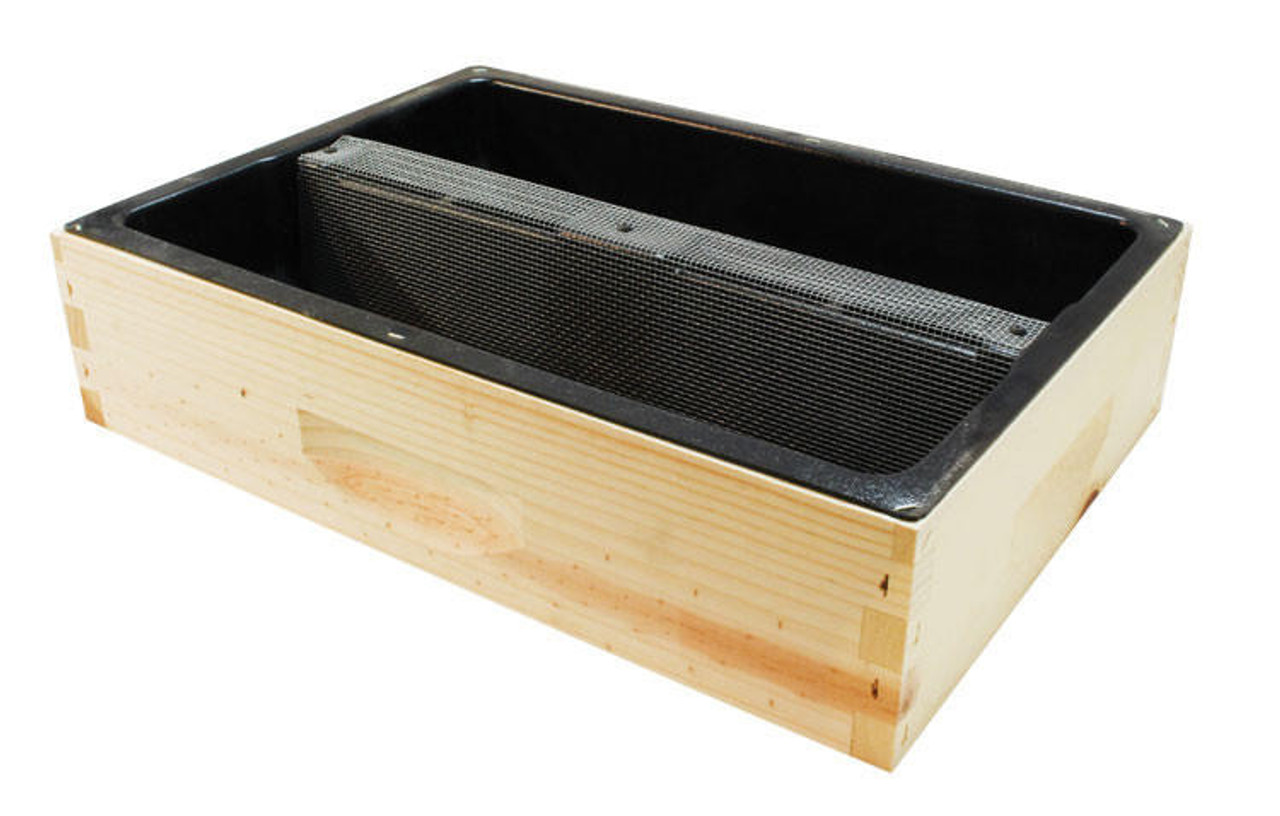
One challenge I’ve had is that once the syrup is gone, the bees can sometimes crawl out of the middle portion and into the feeder area.
Continue readingMercury is gone
My hive Mercury didn’t make it through my Formic Pro treatment. I had forgotten to remove the entrance reducers, which is recommended, but the other hives pulled through just fine. So perhaps the hive was already weak from disease or otherwise compromised, and the bees just couldn’t survive. Some pictures are below.
Continue reading Bees with eeb