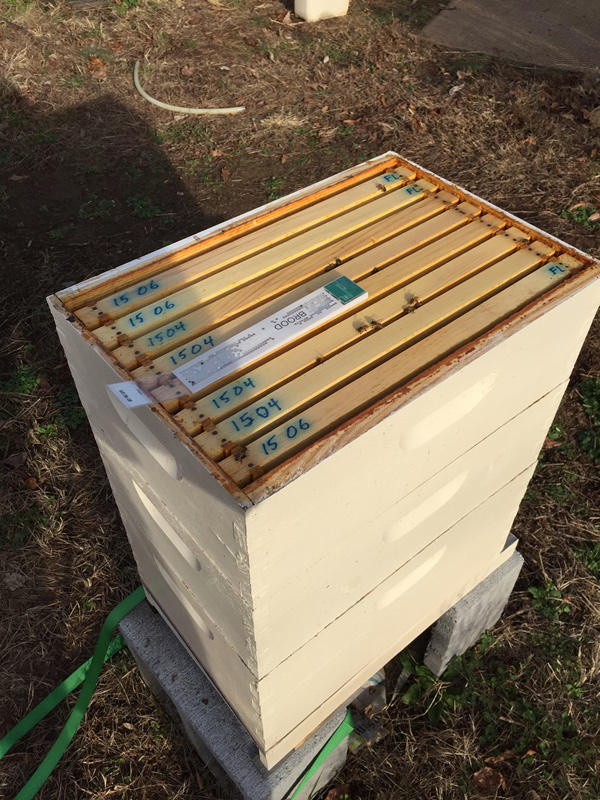
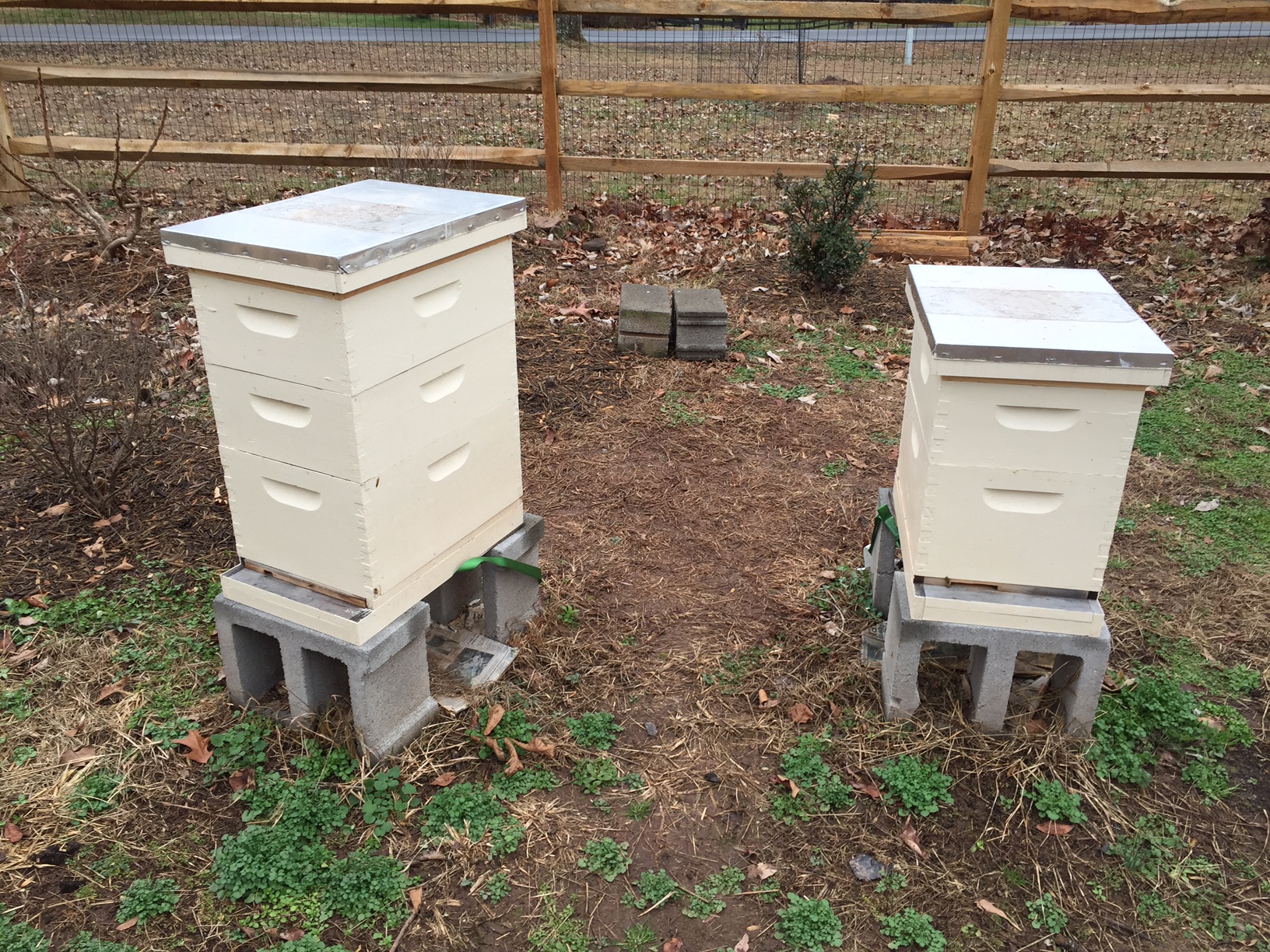
This started as my official end of year hive update, so now it has become my official beginning of the year hive update. Happy 2016 to one and all. The hives are officially closed up until spring is on the horizon. With our mostly warm days of late, this might come sooner than expected. We had some bushes start to bloom, especially our two Quince bushes, though the weather turned decidedly cold this week so winter seems to have finally arrived. Continue reading
Author: Erik
The mites before Christmas
There were mites before Christmas
when all through the hives,
The honey bees struggled
in a fight for their lives. Continue reading
Hey-bee it’s cold outside
I received my BroodMinder “Health Telemetry Sensor” devices this past week. It was a good week to have temperature and humidity sensors, as it’s been colder here with some hard frosts overnight multiple days in a row. Mind you, this is Virginia, so it’s been warm with the bees flying in the afternoons. This weekend we’re expecting temperatures near 70 (21 C), so don’t feel too bad for me or the bees.
I thought I would share some initial experience with the device and some changes I’ve already made to the hives as a result of the readings. Continue reading
Bees With A Smile
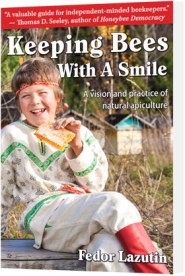
I recently finished Fedor Lazutin’s book Keeping Bees With A Smile. It is a rather fascinating read about keeping bees naturally in the depths of Russia, where the winters really are six months long. I have to thank the Happy Hour at the Top Bar blog for recommending the book. I really enjoyed the different perspective on beekeeping and discussion of a hive style I was not at all familiar with. Continue reading
Happy is the bee that the sun shines on

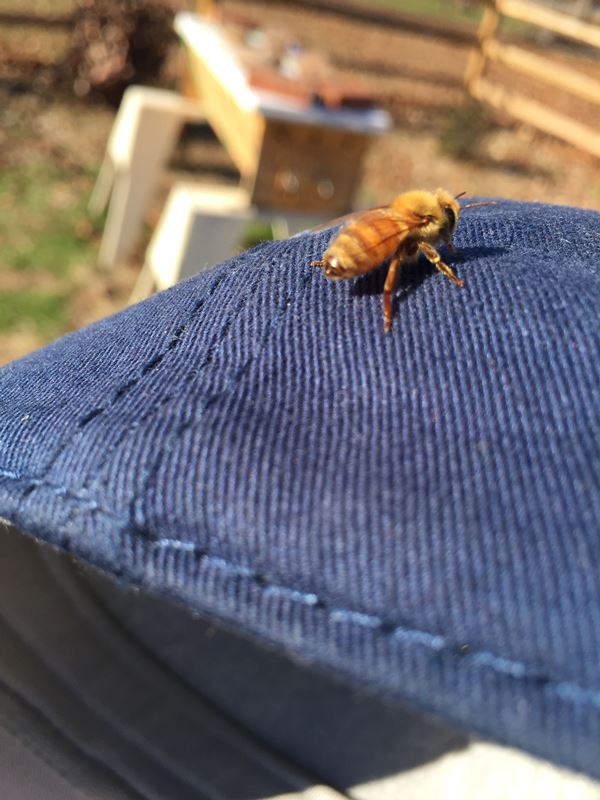
This bee landed on my hat (while I was wearing it) and hung out long enough for a picture. © Erik Brown
The cold is slowly coming to Virginia. Most of our days have been warm enough for the bees to fly, with only a handful of fall days colder than 50 degrees (10 Celcius). A couple frosty nights here and there but again most nights well above freezing. Tuesday I finished some winter preparations on the hives, and it was in the mid-50’s. The top bar hive was especially buzzing for a good 15 or 20 minutes, with dozens of bees checking out the bee yard.
According to Jürgen Tautz in his book The Buzz about Bees, so-called orientation flights generally occur only when a queen is present. So I’ll take this activity as a good sign. Continue reading
Dancing Queen: watch that scene
This is the second of two posts about the VSBA 2015 Fall Meeting. See the intro post for a short summary of the meeting, and the prior post for a discussion of Dr. David Tarpy’s talks. This second post is about the sessions given by Dr. Ernesto Guzman on selective breeding and the use of natural oils and nutraceuticals in a hive. Continue reading
Dancing Queen: see that girl
This is the first of two posts about the VSBA 2015 Fall Meeting. See my prior post for a short summary of the meeting. This post is about the two talks given by Dr. David Tarpy on queen quality and the bee testing clinic at the North Carolina State University (NCSU).
Dancing Queen
The Virginia State Beekeepers Association 2015 Fall Meeting was held this weekend at Blue Ridge Community College in Weyers Cave, Virginia. This is less than two hours from my house, so I woke up in the wee hours to drive through the beautiful Shenandoah Mountains to attend the meeting.
Bee on a wire
A quick update on our bee fence. If you’ve been following along, you know that the fence encloses our apiary on the side of our yard. My neighbor used his tractor to dig the post holes, which was a huge help, and I installed the rails over the first few months of the bee year. See my post Bee! I’m Expecting You! for some historical photos of the spot. Continue reading
The Buzz about Bees
I finished reading Jürgen Tautz’s book The Buzz about Bees, Biology of a Superorganism. A number of sources touted this as an excellent book, and I was not disappointed. The book presents the case for treating the entire colony as an organism. Center to Tautz’s argument is that a bee on its own cannot reproduce; the unit of reproduction is the colony itself via swarming and requires the workers, the drones, as well as the queen. Continue reading