This has been a busy month. Work, bike riding, yard tending, getting ready for a high school graduation, and of course bees. That last one has made for a rather interesting month. I have three updates that I will split into three posts so this doesn’t get too long. A Star Wars theme is never bad, so we’ll do this via the original episodes.
Author: Erik
Live like bees in clover
The clover is blooming! While the bees may be a little frustrating of late, the flowers make me smile. The bees are doing okay, actually. Still, this is a good week for a clover post so here we go. Continue reading
Great hives from little nucs grow
We have had a few weeks of spring lately, with the air full of pollen and the bees going crazy. Rain and cool weather returned this weekend, so I am not able to work outside. I am instead sitting inside and writing this early spring update. A year will come when I feel that my springtime work with bees goes well and the hives are buzzing along, so to speak. This is not that year.
Bees, Glorious Bees
The air smells slightly of pollen and the bees are going crazy, so you know that spring has arrived. Our cool nights are probably not totally over, and daytime temperatures occasionally call for a jacket. The hives are expanding quickly so it is time for a spring update.

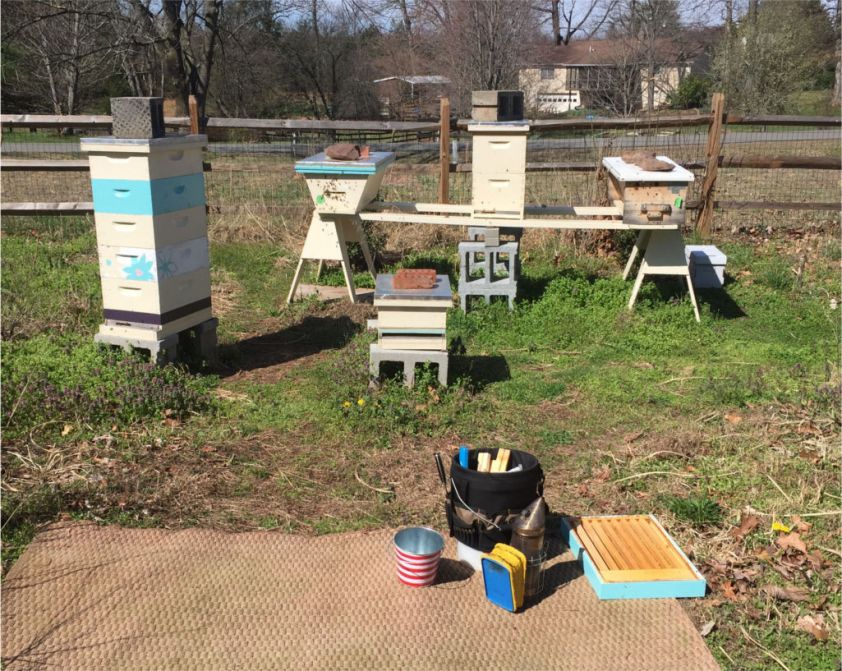
My little apiary on March 25, 2017. ©Erik Brown
In and Out of Bee Time
I recently finished the book Bee Time: Lessons from the Hive, by Mark Winston, and thought a short summary might be appropriate. We’ve been riding a roller coaster of temperatures lately, with 60 F one day and a chance of snow the next. The weather is trying to settle into a normal spring pattern this week, so hopefully the snow and freezing temperatures have come to an end. Continue reading
The more mites change, the more bees stay the same
In 1519, Spanish forces arrived in Mexico with weapons both seen and unseen. Between 1545 and 1550, up to 80 percent of the native Aztec population is believed to have been wiped out by disease, possibly a deadly form of salmonella.
In 1987, the varroa mite arrived in the United States with weapons both seen and unseen. In the most recent beekeeping season from 2015 to 2016, beekeepers lost an estimated 44 percent of their bees.
Coincidence? Maybe not. Some thoughts on the evolution of honey bees and varroa mites. Continue reading
Nobody forgets a good beehive
Ah well, I’ve been saying for weeks that Mars is very weak. It turns out I’ve been mixing up my hives and it was Jupiter all along. I found no debris on the bottom board before work yesterday, and at the end of the rather warm day the hive was already being robbed out. A cluster of dead bees on the comb and a few others on the bottom. Continue reading
A clover and one bee
Spring is in the air, though winter made a visit this week. The plants are gearing up for full bloom, with yellow daffodils and red quince bushes starting the show. The maple trees are in bloom as well, so there is nectar and pollen for the taking if the weather would warm up. I have been updating my bloom date log for 2017, and thought is was worth a quick mention as a new post. Continue reading
Every hive has its own law
W
ell, it’s official, or at least I am official. After an inspection this past week, I am legally permitted to sell bees in the state of Virginia. I have the stickers to prove it.
In our weather, we had three days over 70 F (21 C) this past week, and the hives are starting to raise brood in earnest to prepare for springtime.
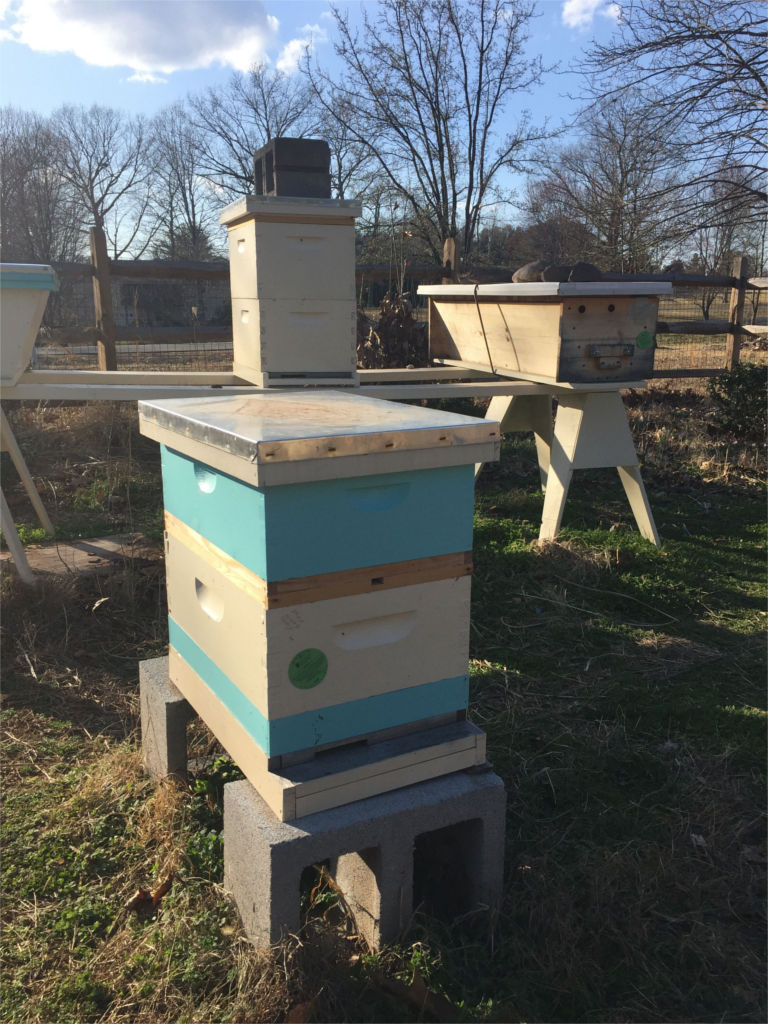
The photo here shows Mars reduced to one medium with some extra stores on top, with Ganymede (the Lang) and Venus (the top bar) in the back. Continue reading
Our Hives They Are a-Changin’
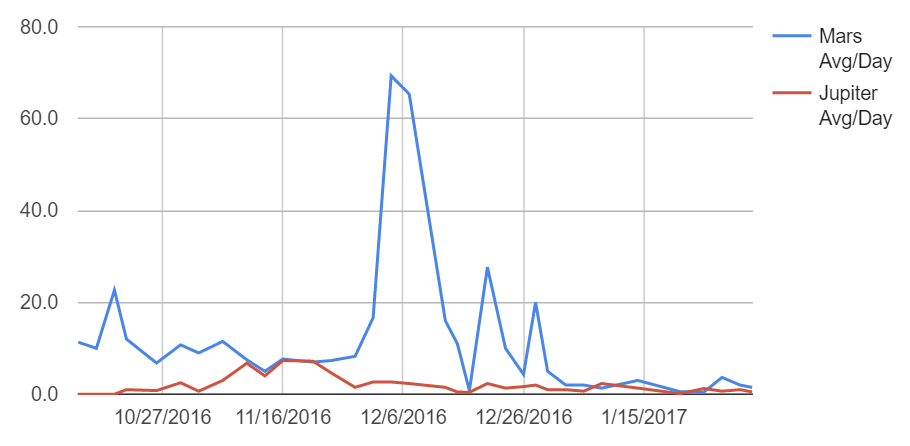
Aside from a single white morning this winter, we have had very little snow in Virginia. The weather is unusually warm and the bees seem to get a flying day once a week or so. I suspect the insect population will be robust this year, from small hive beetles to other assorted insects, due to our lack of cold weather. Soon the bees will start ramping up for spring, and I have been keeping an eye on the mite populations in Mars and Jupiter.