Today’s letter S is for Stinger. We have talked about stingers before, especially in our 12 Days of Honey Bees. There we discussed how stingers evolved from the egg-laying ovipositor and thus only appear in females, but we didn’t get into the structure a stinger very much. Of course, stinger is also a great S word, so how could I resist.
The honey bee worker is the only bee with a barbed stinger that causes them to die after stinging, based on a great overview of the stinger in Bee Culture magazine. The stinger is actually two lancets that work together to deliver venom into the target. A worker will arch its back and push the stinger sheath into its victim, inserting the barbed stinger blade into the skin and delivering the venom. In some insects the worker can sting multiple times; in a fleshy mammal like humans, the barbs pull the venom sack and other parts seen in the below diagram out of the bee. The venom sack continues to deliver venom as long as the singer remains embedded in the skin.
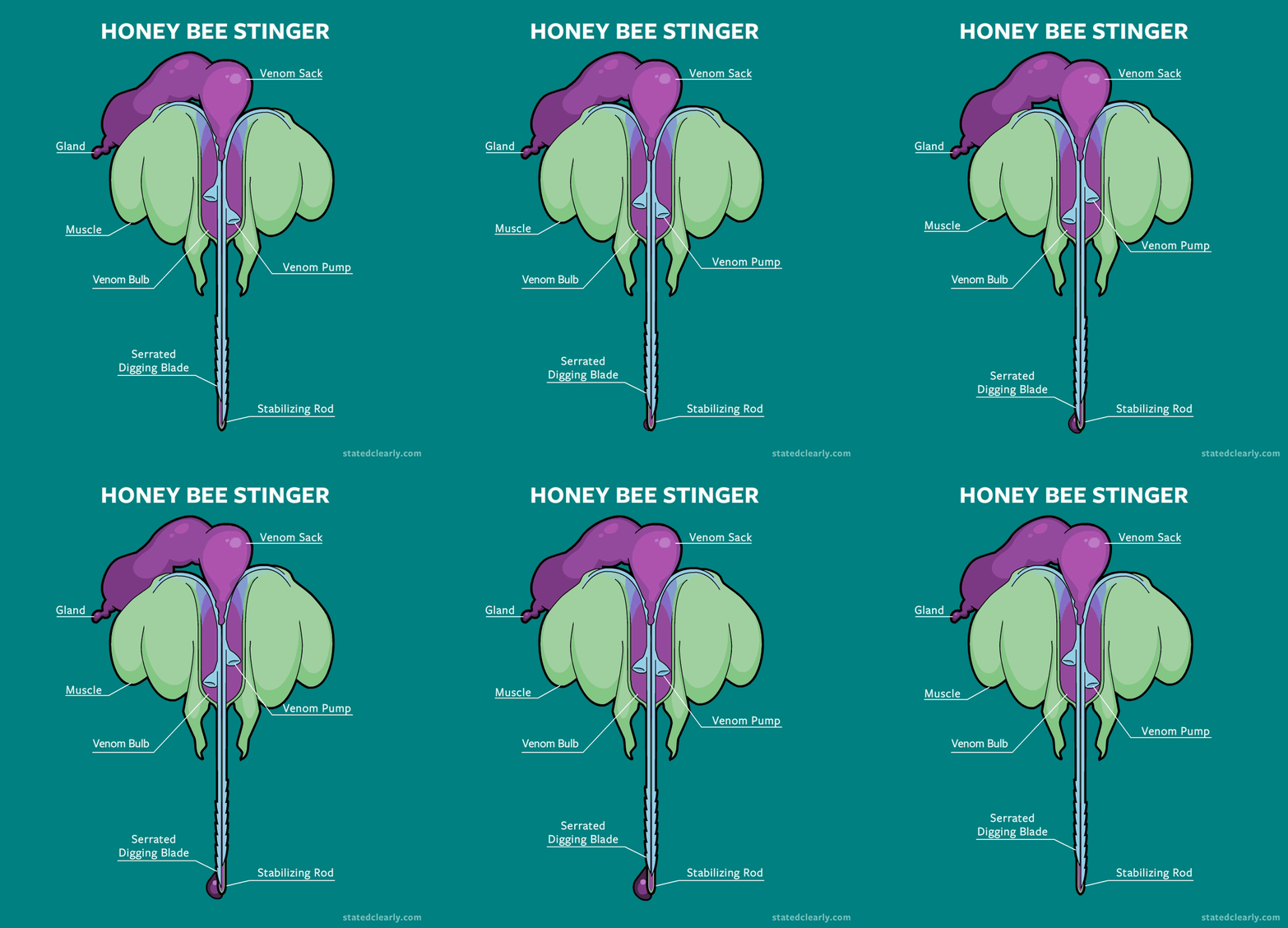
Bee venom is acidic (as opposed to wasp venom which is alkaline). Bee venom is roughly 88% water, with a protein melittin that ruptures red blood cells and causes the intense pain felt. If you are stung by a honey bee, walk away from any nearby colony and use your fingernail to pull out the stinger. This will stop additional venom from pumping into your skin and reduce any reaction.
Most people have a local reaction to a sting, typically a redness or swelling of the immediate or local area. This is a normal response An allergic reaction is systemic, with a response not local to the area of the sting. This can be skin hives, swelling in other parts of the body, or other reactions or varying severity. A very small percentage of adults, around 3%, are allergic to bee venom in this manner.
May you prosper and find honey.
 Bees with eeb