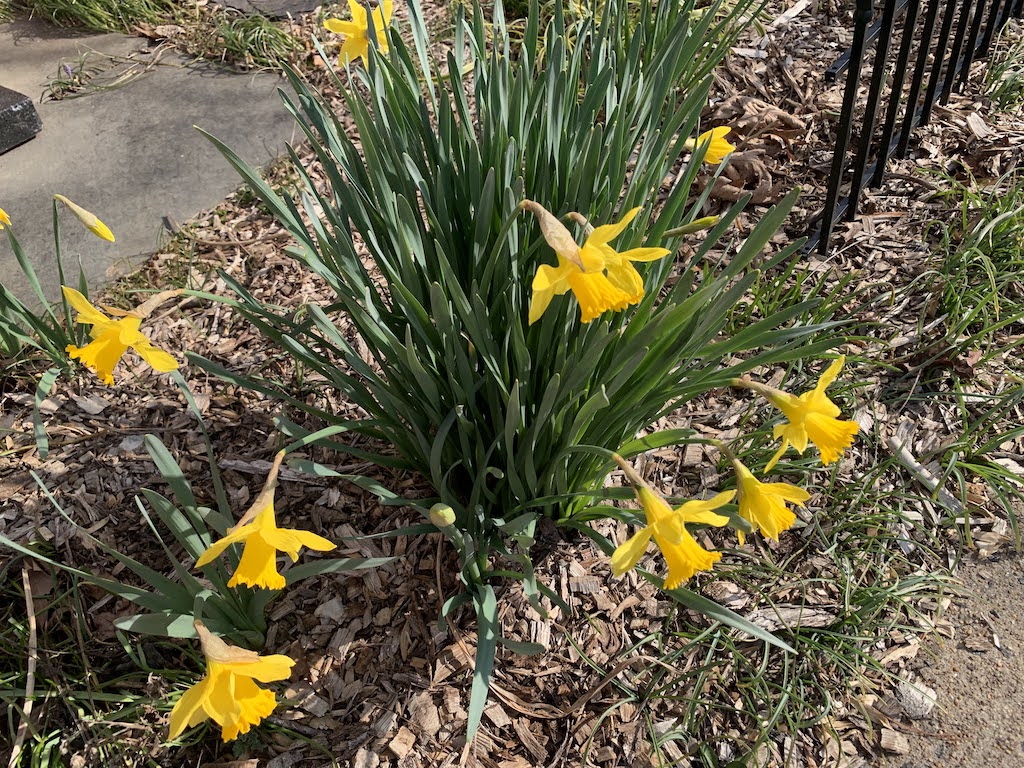
Today’s letter P is for Pollination. Not a bee part, I know, but it’s March 1 in Virginia and the flowers are getting ready to burst. We have crocus, daffodils, and creeping speedwell blooming so far, and more on the way. It looks like we may have some warm weather on Sunday, in which case I may check to see if the bees are bringing in nectar from the neighborhood.
As you probably know, bees pollinate by picking up pollen on one flower and transferring it to another flower. Moving pollen onto the stigma and allowing the production of seeds.
As part of the subfamily Apinae, honey bees have a unique structure called the Corbiculae, which we talked about for letter C. The corbiculae, or pollen basket, allows Apinae bees including honey bees to pack the pollen away and essentially keep it from pollinating the flower. Other pollen that attaches to the bee’s body can transfer to a stigma of the next plan visited.
Honey bees also have floral fidelity, our F word. This means that workers stick with the same type of flower all day long, meaning that when they transfer pollen, it is usually from the right type of plant. Honey bees are not great pollinators of gardens, since they prefer an abundance of the same type of flower, such as found on bushes, on trees, and in meadows.
The upcoming food sources around our house are the maple trees and hollies, which provide an early source of nectar as long as the weather doesn’t freeze.
May you prosper and find honey.
 Bees with eeb