Today’s letter K is for Killer Bees. This is a term most beekeepers do not like or appreciate. Bees in general are not killers, and in fact most individual stings to non-beekeepers are from wasps, not bees. Since honey bees die after they sting, they tend not to do so away from their home hive.
In any case, the so-called killer bees are not African bees either. What the press calls killer bees are actually Africanized bees, a cross between western (European) honey bees and the East Africa lowland honey bee, the Apis mellifera scutellata. Western honey bees did not do well in Brazil, so the government funded a project to see if a cross-breed could fare a bit better.
Some of the experimental queens escaped through human error, and the rest is history. They spread quickly through South America, and moved into Central America and the southern United States. Africanized bees tend to be smaller, they swarm more quickly, and are more aggressive when disturbed. Proponents say they fight Varroa well and are good honey produces.
Most bee species have an alarm sense, so when one bee sets off an alarm, other bees join in over time to attack the intruder. With Africanized bees, they seem to have lost this sense, so that when an alarm is raised, nearly the entire hive attacks. So these bees are indeed dangerous and can quickly overwhelm an animal or smaller human.
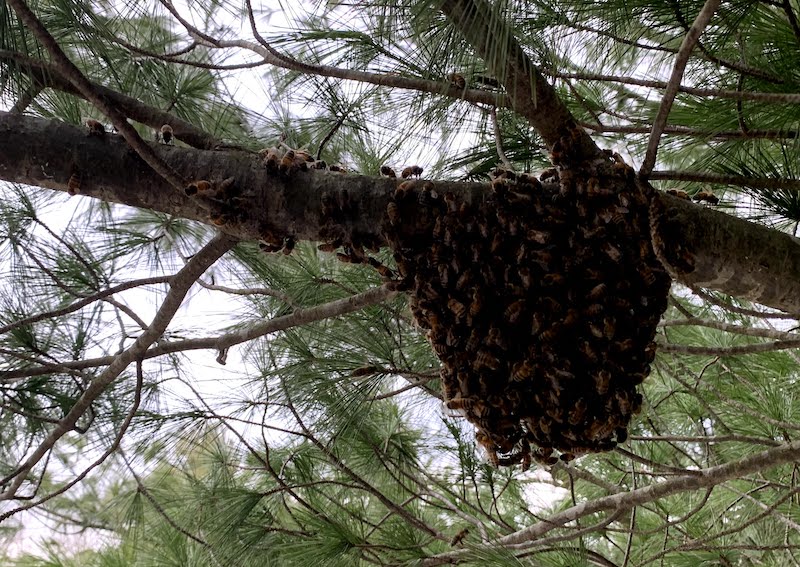
Fortunately for us, Africanized bees do not perform well when forage is scarce, especially in colder climates. As a result these bees have not moved very far into the United States, and certainly not into Virginia.
It appears that Africanized bees will likely become more gentle over time. In Peurto Rico, where these bees are more isolated, these bees have become much more gentle and not a serious risk to human populations.
May you prosper and find honey.
 Bees with eeb