Keeping bees out of the syrup

Which type of hive feeder to buy is one of those big questions in beekeeping. Every beekeeper has multiple opinions and they are probably all correct. For me, I prefer a feeder that keeps the bees out. I like to lift the top off and not see bees flying out. So feeders like this Dadant wooden feeder where the bees crawl onto floating wooden platforms don’t work as well for me.

I have some Mann Lake feeders and a couple Dadant feeders that meet my criteria. The bees crawl up to the syrup but cannot fly out. The Mann Lake one, as shown in the below image, simply has wired mesh covering a central entrance. The bees crawl the middle and down the wire to the syrup.
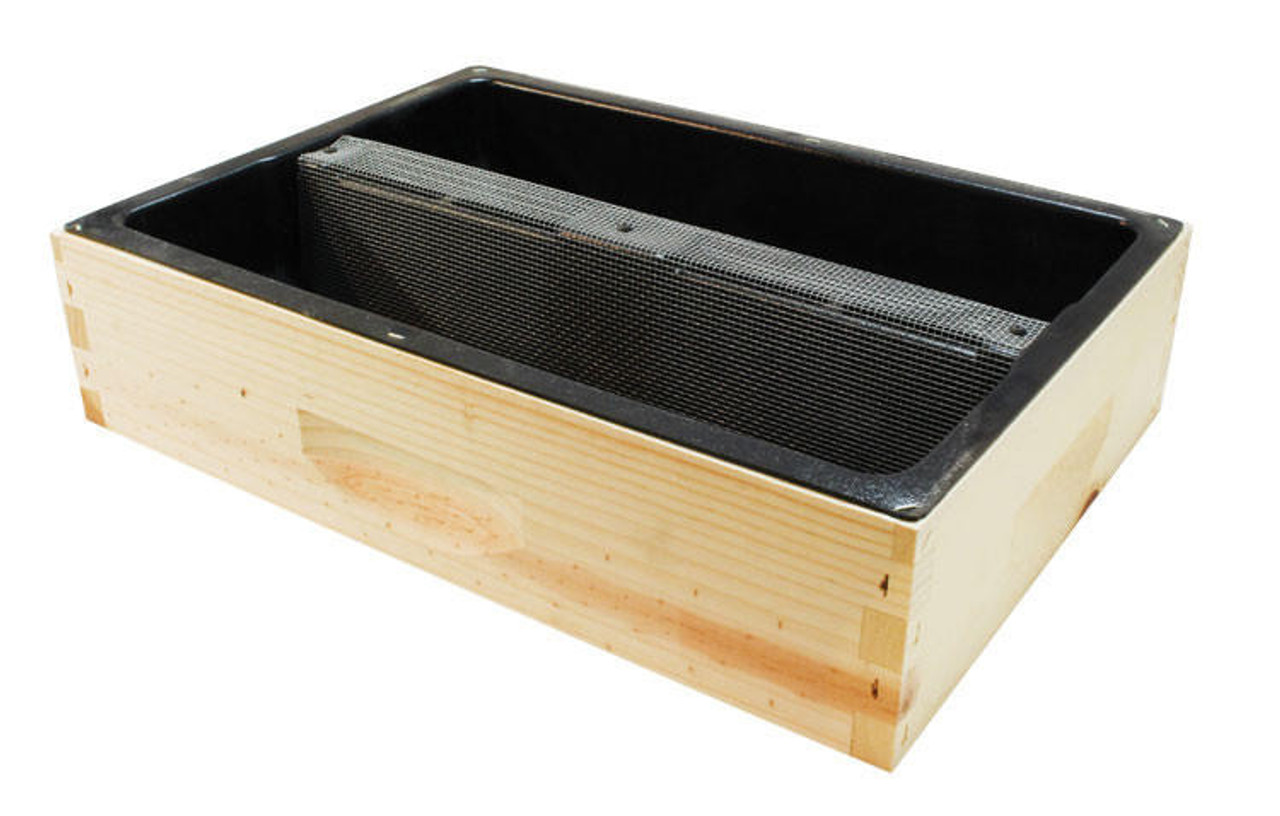
One challenge I’ve had is that once the syrup is gone, the bees can sometimes crawl out of the middle portion and into the feeder area.

Continue reading

Mercury is gone

My hive Mercury didn’t make it through my Formic Pro treatment. I had forgotten to remove the entrance reducers, which is recommended, but the other hives pulled through just fine. So perhaps the hive was already weak from disease or otherwise compromised, and the bees just couldn’t survive. Some pictures are below.

Continue reading

Yellow Garden Spider

Okay, not a bee, but I saw this HUGE spider in our yard recently so had to share it. The below picture is Argiope aurantia, or a Yellow Garden Spider. It created a beautiful web behind our pool, just sitting amongst the Lamb’s Ear waiting for lunch. I’m not really into spiders, and was a little freaked out. Wikipedia says it is harmless to non-allergic humans, so it must be true.

Since we’ve been discussing scientific classifications, spiders are in the Class Arachnida, while bees and other insects are in the Class Insecta.

May you prosper and find honey.

2023 Varroa Treatments

I did a Varroa treatment recently (on Aug 27). I like to use Formic acid, as it is an organic product produced naturally in nature and bees have a natural resistance. It doesn’t mean the chemical isn’t hard on the gals, but I’m at least using something natural. Most natural beekeeping guidelines and come country’s organic management requirements allow for natural treatments like Formic Pro and Apiguard.

Continue reading

Two-spotted scoliid wasps

Through much of August, these low flying bugs made lazy patterns above the grass in our backyard, apparently looking for something. It was bit of an adventure to figure out what they were, as they didn’t seem to stop moving. I eventually figured out they are a species called Scolia dubia, or more commonly called blue-winged scoliid wasps or two-spotted scoliid wasps

Continue reading